
Why AI gets it wrong: everything has to fit in one context window
LLMs don't fail because they're dumb, they fail because every fact, instruction, and document has to fit in a fixed token budget. Here's why, and the engineering that fixes it.
Notes on building AI agents, LLM systems, and software that holds up in production.

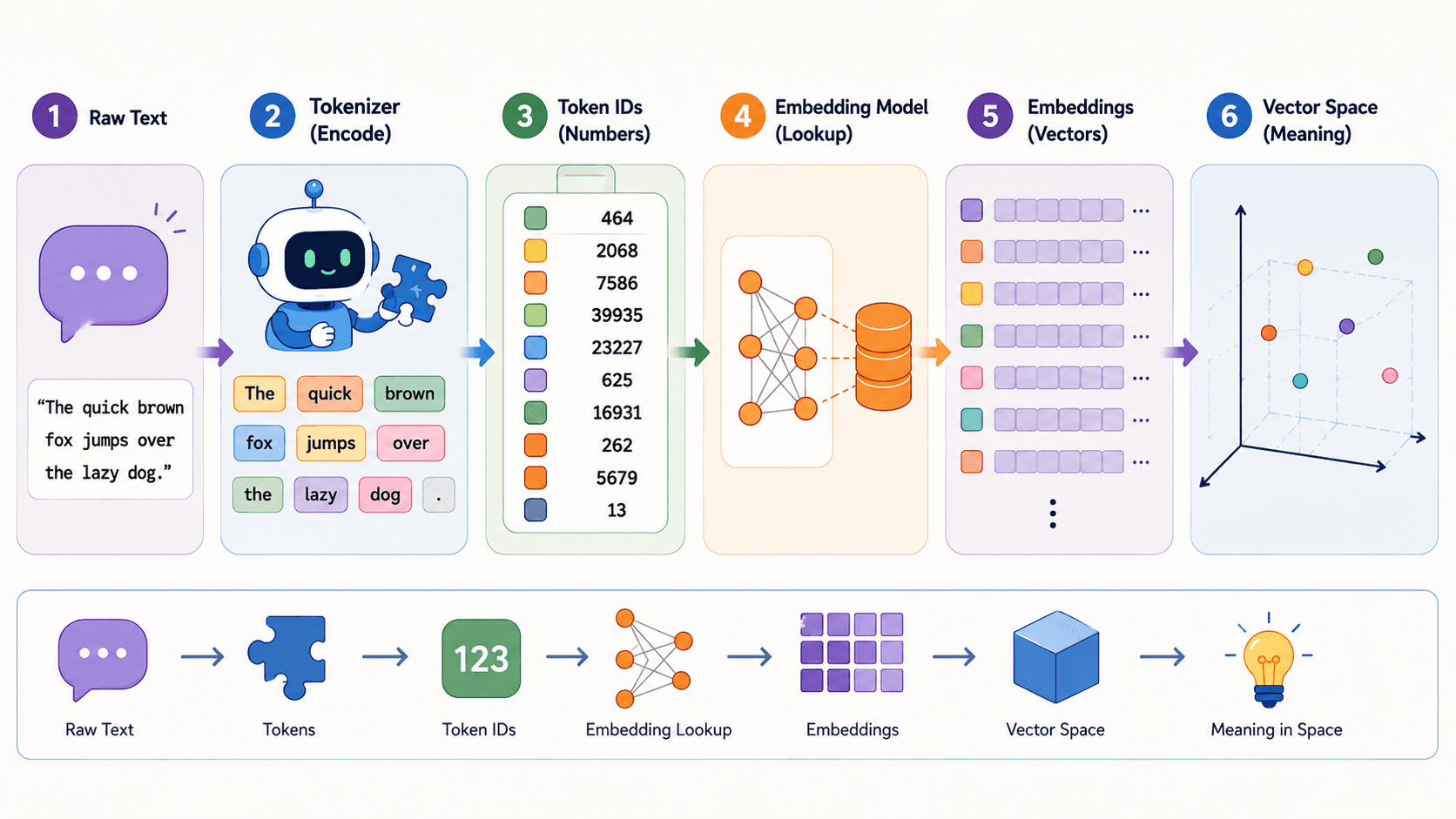
Eight stops between the words you type and the grid of numbers a model actually receives. Build the merge table yourself, cut a sentence apart, follow it down to raw bytes, and come out the other side in vector space. Every stop is playable in the page.
LLMs don't fail because they're dumb, they fail because every fact, instruction, and document has to fit in a fixed token budget. Here's why, and the engineering that fixes it.
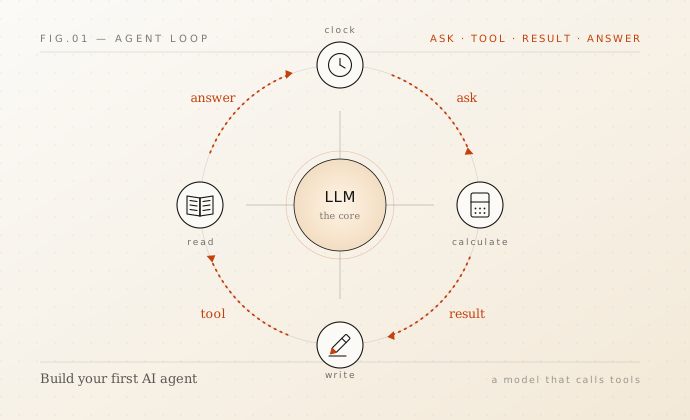
A hands-on walkthrough that builds up the agent loop one cell at a time, from a plain LLM that can only produce text to an agent that chains tools to finish a real task.
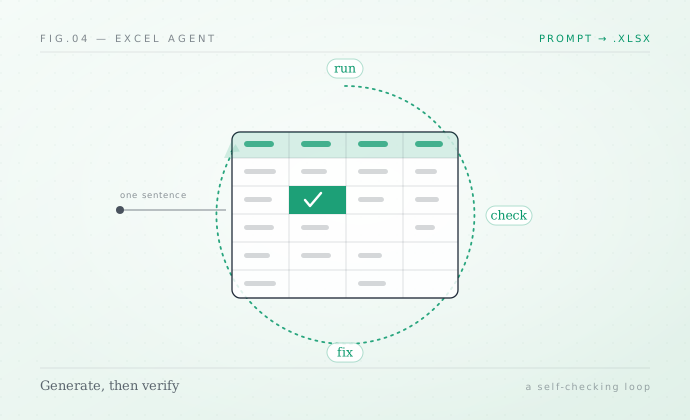
A from-scratch agentic CLI that turns one sentence into a formatted .xlsx: formulas, charts, conditional formatting, and a validator the agent writes for itself. No framework. One brain, two wire protocols.
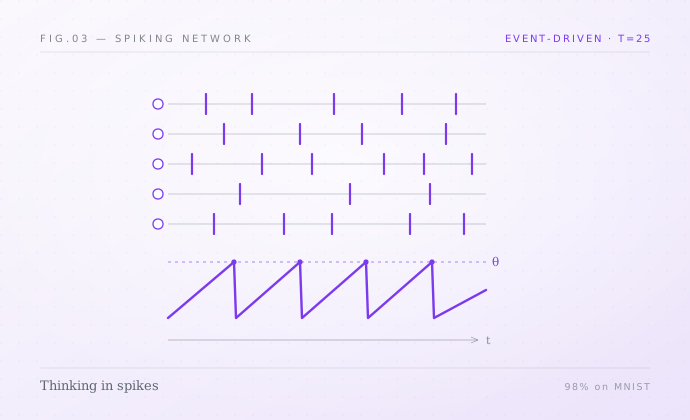
I built a leaky integrate-and-fire spiking network in snnTorch that reaches 98% on MNIST using discrete spikes over time instead of continuous activations. Here is how event-driven inference actually works, and why it matters for edge hardware.